
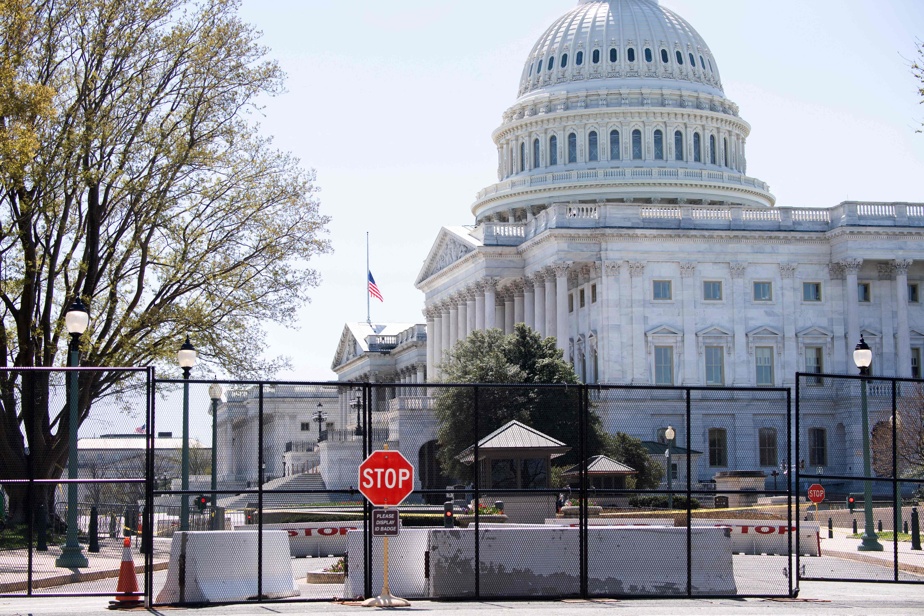
(Washington) Security measures and U.S. Authorities on Sunday called for a balance between the need to make the capital available to the public, after another attack was targeted this week.

A Capitol police officer was killed and another was injured when a man threw his car at them before crashing into a security fence. The driver came out of the vehicle with a knife in his hand before firing.
The attack comes three months after pro-Trump protesters stormed Congress headquarters in Washington on Jan. 6, including right-wing activists.
Discussion about the defense of the site was reopened, especially about the barrier built after the January 6 attack, around the buildings that housed the complex. Part of it has recently been removed and the security perimeter around the main building and its famous dome has been tightened.
Missouri-based Republican Senator Roy Blunt has warned against the idea of barricading the campus.
“I think it would be a mistake if there were permanent barriers around the capital,” he told ABC, adding that they were there when the “assailant’s car” attacked them. Police officials said Friday.
Russell Honor, a retired lieutenant general who conducted an audit of the security system after the January 6 attack, said elected officials on both sides made security a priority – wanting the building to be “100% accessible”.
“This is something that all the members of Congress we talked about during the six weeks we were there put forward: they want public access,” he told ABC.
It is possible to achieve such a balance with “improvements and barriers to resources, cameras and sensors for Capital Police”. He suggested sending 200 National Guard soldiers to the scene permanently for a period of two years, as happened after 9/11.
Recommendations are given. “We gave them a plan. We worked a lot on it. Now it’s up to Congress to work on it.”




More Stories
Winter Storm Watches Issued Across Newfoundland
Trump Orders U.S. Government to Cut Ties With Anthropic Amid AI Dispute
Allegations of corruption Qatar warns of ‘negative impact’ of European measures