

Ubisoft has outlined the system requirements for Assassin’s Creed Black Flag Resynced, and the updated edition of the 2013 title is shaping up to be a significant technical leap. With advanced lighting, improved water physics, and modern rendering techniques, the game places heavy demands on PC hardware—particularly for players aiming to experience it at the highest visual settings.
Extreme Settings Push Modern GPUs to Their Limits
For players targeting 4K resolution at 60 frames per second on the “Extreme” preset, Ubisoft recommends an Nvidia GeForce RTX 4090. Even then, upscaling via DLSS at the Quality setting is required to maintain performance.
The overhaul includes ray-traced global illumination and reflections, alongside assets rebuilt using micropolygon geometry and physically based rendering (PBR). Enhanced water simulation also plays a central role, particularly in recreating the naval gameplay that defined the original release.
While these upgrades improve realism, they significantly increase hardware requirements—making this one of the more demanding recent PC releases.
Scalable Performance Across a Range of Systems
Despite the steep requirements at the high end, Ubisoft has emphasized scalability. The game is designed to run on older mid-range systems, including GPUs like the Nvidia GeForce GTX 1660, thanks to software-based ray tracing options.
There are also tailored presets for handheld gaming devices such as the Steam Deck, reflecting broader trends in Canada and globally toward portable PC gaming.
Minimum requirements remain consistent across presets:
- 16GB RAM (dual-channel)
- Windows 10 or Windows 11
- 65GB SSD storage
For 1080p at 30fps on low settings, players will need hardware such as a GTX 1660, Radeon RX 5500 XT, or Intel Arc A580, paired with a Ryzen 5 3600 or Intel Core i7-8700K.
Recommended Specs for Smooth Gameplay
For a more fluid experience at 1080p and 60fps on medium settings, Ubisoft recommends GPUs like the RTX 3060 or RX 6600 XT, alongside a Ryzen 5 3600 or Core i5-10600K. These settings introduce hardware-accelerated ray tracing while maintaining accessible performance.
At 1440p and 60fps on high settings, requirements increase to an RTX 3080 or RX 6800 XT, paired with a Ryzen 5 5600X or Intel Core i5-11600K. This configuration is expected to be a practical target for many Canadian PC gamers seeking a balance between visual quality and performance.
4K Ultra Gaming Requires Top-Tier Hardware
Running the game at 4K resolution with ultra settings demands top-tier components, including an RTX 4090 or Radeon RX 7900 XTX, combined with CPUs like the Ryzen 7 5700X3D or Intel Core i7-12700K.
Players unwilling to compromise on visual fidelity can enable frame generation technologies to improve smoothness, though this further underscores the reliance on cutting-edge GPUs.
The game supports a full suite of upscaling technologies, including Nvidia DLSS 4.5, AMD FSR 4, and Intel XeSS 3, offering flexibility across hardware ecosystems.
A Modernized Return to the Caribbean
Assassin’s Creed Black Flag Resynced is a remastered version of the fan-favourite pirate adventure, developed by Ubisoft Singapore with contributions from the original team. Built on the latest iteration of Ubisoft’s Anvil engine, the game introduces updated lighting, new missions, and refined combat mechanics.
Enhancements include improved stealth systems—such as crouching—new parry mechanics, dynamic weather powered by the Atmos system, and destructible environments that react to combat and environmental conditions.
The game is scheduled for release on July 9, 2026, marking 13 years since the original launch.
Platforms and Pricing
The title will be available on PlayStation 5, Xbox Series X|S, and PC via Ubisoft Store, Epic Games Store, and Steam. Pricing is set at $59.99 USD, which typically translates to around $79.99 CAD depending on regional adjustments. Cloud gaming options, including GeForce Now and Blacknut, will also be supported.
Conclusion
While Assassin’s Creed Black Flag Resynced delivers a substantial visual and technical upgrade, it comes at the cost of steep hardware requirements for top-tier performance. For many players, mid-range settings will provide the best balance. Meanwhile, those without access to the latest GPUs may still find value in revisiting the original, which remains widely regarded as one of the strongest entries in the series.



More Stories
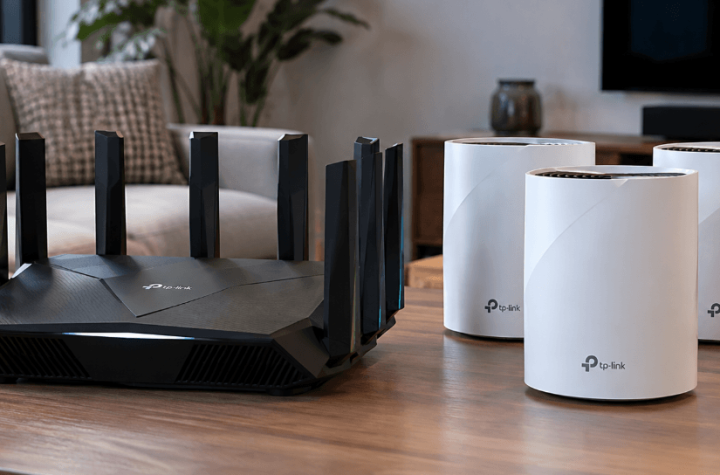
TP-Link Unveils Wi-Fi 8 Archer 8 Ultra and Deco 8 Ultra With Focus on Reliable Home Connectivity
Google Messages Rolls Out New RCS Features, Chat Themes and Easier Message Controls
Why a Google TV Projector Could Replace My Next Television