
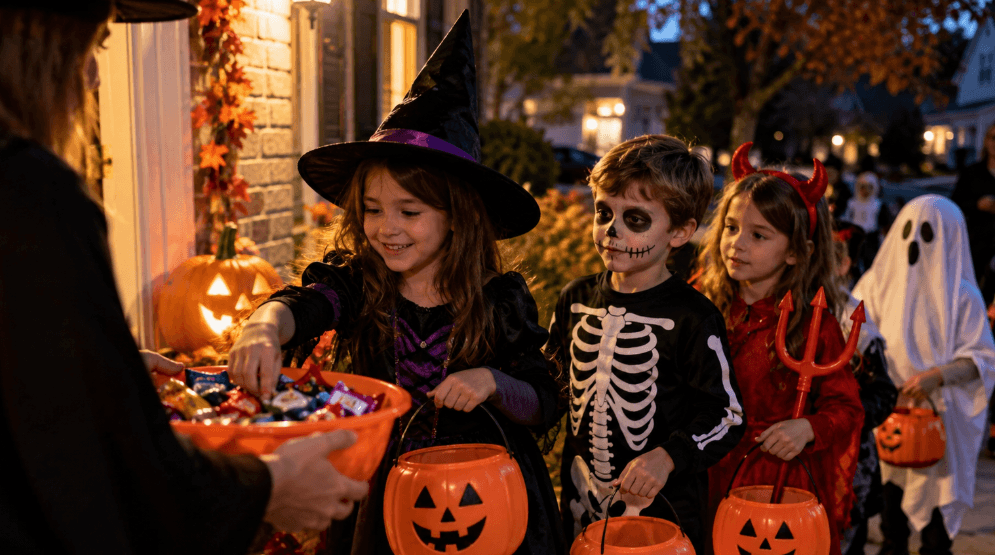
Halloween falls on a Saturday in 2026, giving families and partygoers a convenient weekend to celebrate. However, a new Canadian survey suggests that residents of British Columbia are increasingly reluctant to make Saturday Halloween a permanent tradition.
According to a survey conducted by Research Co., support for moving Halloween from its traditional October 31 date to the last Saturday of October remains relatively low in British Columbia, reflecting a broader national debate over whether the holiday should follow a fixed date or a more convenient weekend schedule.
British Columbia Among Provinces Least Supportive of Saturday Halloween
Halloween falls on a Saturday only occasionally, typically once every six to 11 years, depending on the calendar. Following this year’s celebration, the holiday will not fall on a Saturday again until 2037.
The timing has renewed discussion about whether Halloween should always be celebrated on the final Saturday of October, potentially making trick-or-treating, costume parties, and community events easier to organize.
However, the latest findings indicate limited enthusiasm for the proposal.
According to Research Co., only 32% of British Columbia residents support moving Halloween to the last Saturday of October. That represents a nine-percentage-point decline compared with 2024.
Alberta recorded even lower support, with just 31% of residents favoring the proposed change.
National Support for Changing Halloween’s Date Declines
Across Canada, slightly more than one-third of respondents support shifting Halloween celebrations to the final Saturday of October.
National support has declined by six percentage points since 2024, suggesting that enthusiasm for changing the holiday’s traditional date has weakened.
Meanwhile, 44% of Canadians oppose modifying Halloween’s date each year, while another 20% remain undecided.
The findings suggest that although a weekend celebration could offer practical advantages, many Canadians prefer maintaining the longstanding tradition of observing Halloween on October 31.
In the United States, where Halloween is also celebrated annually on October 31, similar discussions about weekend scheduling have emerged, particularly around school-night trick-or-treating and family convenience.
Canadians Express Concerns About Certain Halloween Costumes
Beyond the debate over Halloween’s date, the Research Co. survey examined public attitudes toward costumes worn by children.
More than half of Canadian respondents said three categories of costumes were inappropriate for children.
These included costumes depicting ethnic stereotypes, outfits involving changes to a person’s skin color, and costumes featuring toy or replica weapons.
The findings reflect broader discussions across North America about cultural sensitivity, public safety, and appropriate Halloween celebrations.
When Should Children Stop Trick-or-Treating?
The survey also explored opinions about the appropriate age for children to stop participating in trick-or-treating.
Responses revealed differing expectations about when young people should transition away from the Halloween tradition.
According to the findings:
-
29% believe trick-or-treating should end when a person reaches adulthood.
-
21% believe children should stop at ages 16 or 17.
-
22% believe ages 14 or 15 are the appropriate cutoff.
The results demonstrate that Canadians do not share a single view about the age at which children should stop collecting Halloween candy.
While some respondents consider trick-or-treating appropriate throughout adolescence, others believe the tradition should end earlier.
Candy Corn Divides Canadians, While Pumpkin Pie Remains Popular
Halloween treats were another focus of the survey, with researchers examining Canadians’ preferences for seasonal foods.
Candy corn, a recognizable Halloween confection in both Canada and the United States, generated nearly equal levels of approval and disapproval.
According to Research Co., 47% of Canadians said they enjoy candy corn, while 44% reported disliking it.
Opinions varied by age, with half of respondents aged 55 and older expressing a dislike for the seasonal candy.
Pumpkin Pie Receives Stronger Approval
Unlike candy corn, pumpkin pie attracted considerably broader support.
The survey found that 70% of Canadians enjoy pumpkin pie, making it a more widely appreciated seasonal treat among respondents.
The dessert is closely associated with fall celebrations across North America, including Canadian Thanksgiving, American Thanksgiving, and the Halloween season.
Research Co. Survey Methodology
Research Co. surveyed more than 1,000 Canadians between October 18 and October 20, 2026, to examine attitudes toward Halloween traditions, costumes, trick-or-treating, and seasonal foods.
The polling organization reported the following statistical measure:
“The margin of error — which measures sample variability — is plus or minus 3.1 percentage points, 19 times out of 20,” Research Co. says.
The results provide insight into how Canadians approach Halloween traditions and whether convenience outweighs the significance of celebrating on a fixed calendar date.
Traditional October 31 Halloween Retains Support
Although Halloween’s Saturday timing in 2026 offers a convenient opportunity for weekend festivities, the survey suggests there is no clear public consensus in favor of permanently changing the holiday’s date.
With support declining in British Columbia and nationally, October 31 remains the preferred traditional date for many Canadians, even when it falls on a weekday.



More Stories
Amazon Unveils Echo Show 16, Echo Time, Alexa Photo Frame and New AI-Powered Echo Speakers
Taylor Swift Ticket Refund Investigation Offers Insight as B.C. Reviews New World Cup Complaints
Paramount Investor Lawsuit Challenges David Ellison’s Warner Bros. Acquisition Plans