
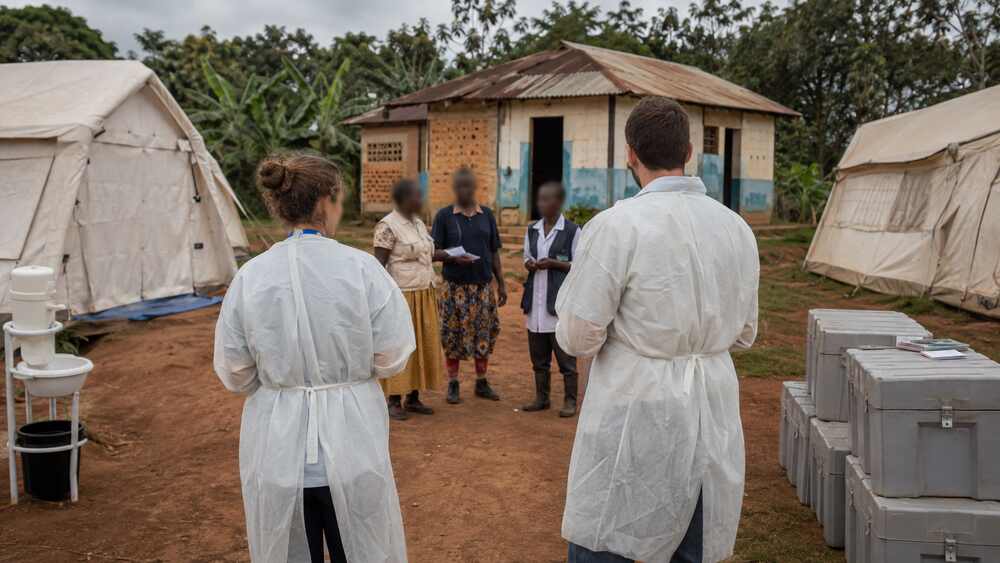
Canadian humanitarian workers responding to an escalating Ebola outbreak in the Democratic Republic of the Congo say community engagement is improving, but infections and deaths continue to rise amid medical, security and logistical challenges.
Ebola Death Toll Continues to Climb
TORONTO — Small pink coffins are displayed along roadsides in Bunia, a city in northeastern Congo, ready for children expected to die during the outbreak.
Meghan Thumath, a registered nurse and public health delegate with the Canadian Red Cross, said coffin vendors have become as common as fruit stands.
“You can’t help to be affected as a health-care provider,” Thumath said, her eyes filling with tears.
More than 2,100 people have died among over 4,500 infected since the outbreak was declared in the spring, according to the latest government figures.
“Each of those numbers is someone’s brother, sister, sibling, family member.”
The World Health Organization has described it as the fastest-growing Ebola outbreak recorded, putting it on course to surpass the deadliest outbreak, which killed more than 11,000 people over a decade ago.
Rare Ebola Species Complicates Response
The outbreak involves the Bundibugyo virus, a comparatively rare Ebola species for which no specific vaccine or treatment is currently available. Clinical studies are underway.
Health teams are also dealing with attacks against workers, threats from rebel groups and communities traumatized by earlier outbreaks. Misinformation claiming Ebola is not real has further complicated efforts.
Limited access to health care, clean water, adequate nutrition and proper hygiene remains another major obstacle.
Early Cases Mistaken for Other Illnesses
Montreal resident Mylene Ratelle arrived several weeks after the WHO officially declared the outbreak in May. The agency later said transmission had likely begun in February, with some early cases misdiagnosed as malaria or typhoid.
Ratelle, hired as a health promotion manager with Médecins Sans Frontières, also known as Doctors Without Borders, said daily life initially appeared normal. Residents attended church and shopped for groceries.
Unlike COVID-19, Ebola does not produce obvious public signs such as widespread masking or physical distancing. It spreads through direct contact with infected bodily fluids, including blood, vomit and semen.
Around the hospital, however, approximately 20 tents serving as treatment centres make the crisis more apparent. Ratelle said the grief of families can be heard throughout the area.
“The family scream their pain and they scream and cry all day long,” she said. “The sound is awful.”
Ratelle recalled several occasions when people threw rocks at her team after relatives tested positive. Some families refused to believe the diagnosis.
“It was like a manifestation of their worries and pain,” she said.
Contact Tracing Overwhelmed in Bunia
Ratelle worked with epidemiologists to trace possible infections across rural Ituri province. Teams contacted, checked temperatures and followed up with roughly 200 to 300 people each day.
While that workload remained manageable in the countryside, Ratelle said the number of contacts requiring followup in Bunia, Ituri’s capital, “is out of control.” A single infected person can generate 20 additional contacts.
Bodies remain highly infectious after death. Traditional funeral practices involving washing or touching the deceased can therefore create further opportunities for transmission.
Local Volunteers Lead Safer Burial Efforts
A central part of Thumath’s Canadian Red Cross assignment involves coordinating supplies and training for safe, dignified burials conducted by local volunteers.
She also helps ensure personal protective equipment shipped from Canada reaches front-line teams. The federal government allocated $1.8 million to local Red Cross operations through an $8-million international assistance package.
Thumath said previous Ebola responses sometimes damaged public trust because burial teams arrived without adequate notice or community consultation. The appearance of strangers wearing full protective suits often heightened fear.
This time, local volunteers visit homes in communities experiencing clusters of infections. They answer questions before deaths occur and work with families to arrange respectful burials that reduce the risk of further transmission.
In some cases, a relative or religious leader is provided with a gown, goggles, mask and gloves so they can safely touch the body.
Humanitarian organizations have also introduced body bags with transparent windows, allowing relatives to see the deceased person’s face. The change responds to rumours that patients taken away by response teams were not actually dead.
“Anything we can do to give power back to community and choice back to community, I think is really useful,” Thumath said.
Although Canadian aid workers report stronger community awareness and greater acceptance of treatment and safer burials, the outbreak’s accelerating toll shows the response remains under severe pressure.
This report by The Canadian Press was first published Aug. 15, 2026.
Canadian Press health coverage receives support through a partnership with the Canadian Medical Association. CP is solely responsible for this content.




More Stories
$5-Million Canadian Research Network Targets Gaps in Women’s Heart and Stroke Recovery
Essential Things You Should Know About Your Dog’s Food
How to Start Working out at the Gym and Not Quit in the First Week